

Why Apex Predators Are Moving Closer to WA’s Shoreline
Apex predators are moving closer to WA’s shoreline as prey shifts, water conditions change and human activity influences behaviour.
Across Western Australia we are seeing more apex predators moving into the near shore zone. Sharks, dolphins, sea lions and even orcas in some regions are appearing closer to beaches than they used to. This is not random and it is not a sign of animals becoming bolder. It is a sign of the coastline changing, the prey shifting and the predators following the food.
Marine ecosystems along WA’s coast are in a period of transition. Warmer water, altered currents, stressed prey species and human activity are all reshaping the near shore environment. Apex predators are responding exactly as ecology predicts. They go where the food goes, where the conditions suit them and where the energy cost of hunting is lowest.
The Near Shore Zone Is Becoming More Productive
WA’s coastline has become richer in recent years. Warmer water and stronger upwelling events have pushed baitfish, squid and juvenile fish closer to shore. When the buffet moves inshore, the hunters do too.
- baitfish schools hugging the surf zone
- squid and small pelagics moving into shallower water
- juvenile sharks using near shore pockets as shelter
- seasonal salmon runs attracting multiple predator species
Predators are not exploring. They are feeding.
Warming Oceans Are Shifting Migration Routes
WA’s waters have warmed faster than many other regions. Even a small temperature change can alter migration, breeding and resting behaviour. Species that once stayed offshore are now comfortable moving into shallower, warmer water.
- sharks following temperature bands
- rays moving into coastal shallows
- large fish species shifting their seasonal routes
- marine mammals using warmer coastal corridors
These changes are not sudden. They are part of a long term climate trend.
Prey Species Are Stressed or Displaced
Environmental stress pushes prey into safer or more productive zones. Storms, heatwaves, salinity changes and habitat loss all influence where prey move. Predators simply track the movement.
- fish pushed into cooler near shore pockets
- baitfish sheltering in bays after storms
- reef degradation forcing species to relocate
- estuaries attracting schooling fish during salinity shifts
When prey cluster, predators follow.
Human Activity Creates Predictable Food Opportunities
Humans unintentionally attract predators. Our behaviour creates reliable food sources and predictable patterns.
- fish cleaning stations
- discarded bait and scraps
- crab pots and burley trails
- recreational fishing hotspots
- aquaculture sites
- boat traffic stirring up prey
Predators learn quickly. If food is available near humans, they will use it.
The Real Drivers of Shark Bites
There is a long standing belief that shark bites increased because black wetsuits made humans look like seals. Modern research shows this is not the case. Sharks do not rely on vision alone. They use electroreception, vibration detection, smell and movement patterns. Wetsuit colour is almost irrelevant compared to environmental and behavioural cues.
Shark bites correlate far more strongly with environmental and behavioural factors than wetsuit colour. The biggest drivers are:
- prey density near shore
- water temperature
- turbidity
- time of day
- seasonal migrations
- longshore drift carrying scent
- human activity patterns
- sharks investigating unfamiliar stimuli
Sharks bite to test, not to feed. Most bites are exploratory, not predatory.
The Coastline Is a Strategic Hunting Corridor
For many marine mammals, the shoreline is not just a boundary. It is a tool. It provides shelter, structure and hunting advantage.
- dolphins herding mullet into surf zones
- orcas pushing prey toward shallows
- sea lions hunting salmon schools close to beaches
- predators using the coastline to trap or corner prey
The shoreline becomes part of the strategy, not an accident.
The Bigger Picture
WA’s marine environment is undergoing rapid change. Warming, acidification, altered currents, habitat loss and increased storm activity are reshaping the coastline. Apex predators are responding in predictable ecological ways.
They are not becoming more aggressive. They are not invading beaches. They are not changing behaviour without reason. The environment is changing, so their behaviour is changing.
Apex predators are simply doing what apex predators do. They track prey, conserve energy and adapt to the landscape as it shifts beneath them.
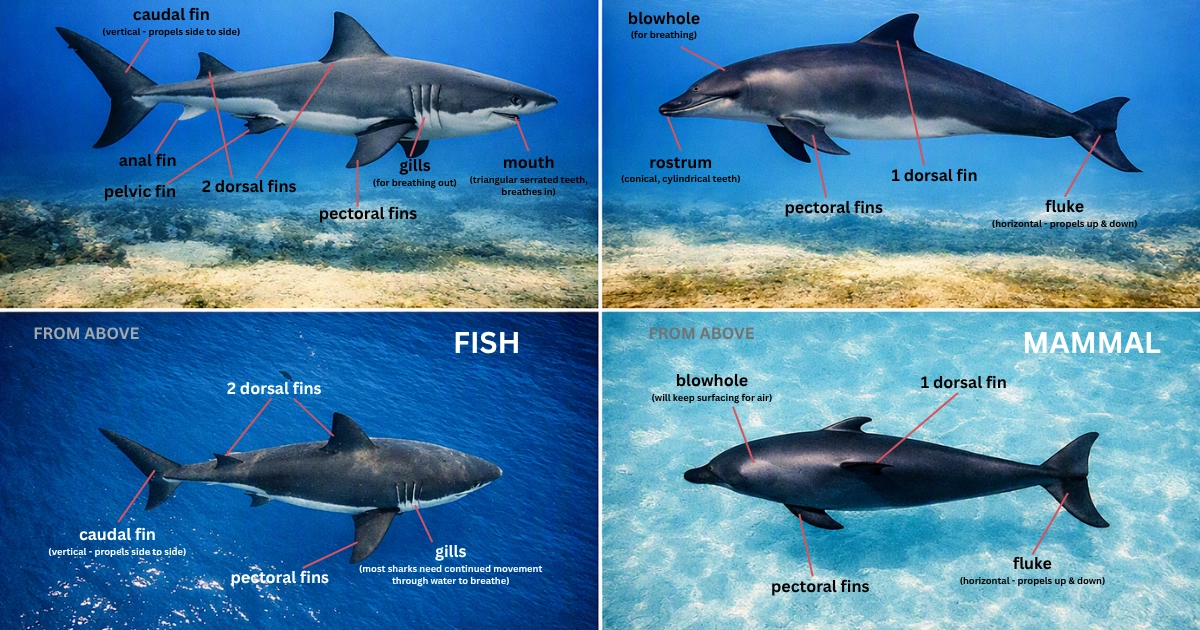
KNOW THE DIFFERENCE BETWEEN
DOLPHINS & SHARKS
01 Oct 2026
